
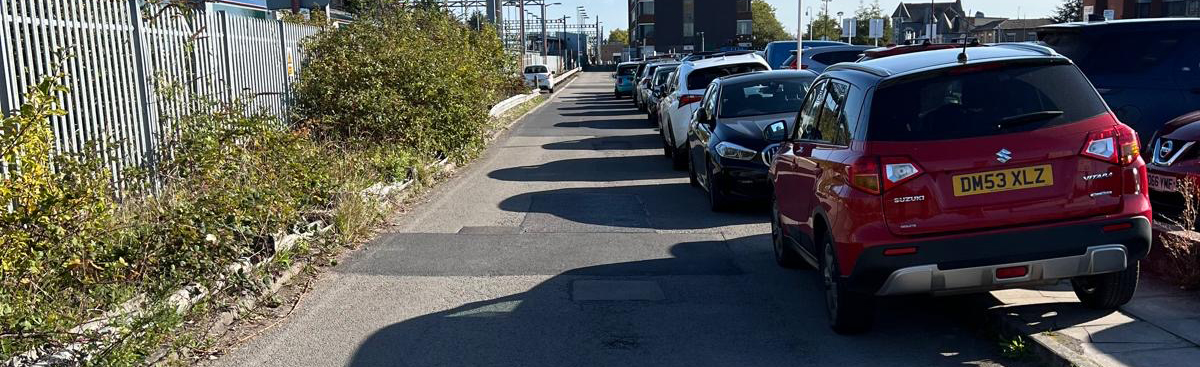
Fly parking is one of the most common and underestimated issues across managed estates.
Blocked access routes. Disrupted traffic flow. Increased safety risk. Ongoing enforcement costs.
It is rarely a one-off problem. It is usually a sign that the site lacks the right controls.
A recent project at Swindon railway station highlights how quickly this can be addressed when the solution is properly engineered.
The Problem
Working on behalf of Network Rail, Swallow identified persistent fly parking in the station car park.
The impact was clear:
- Obstructed access and egress routes
- Increased risk near operational rail interfaces
- Disrupted vehicle movement
- Ongoing reliance on reactive enforcement
The issue was not awareness. It was behaviour.
And behaviour is shaped by the environment.
The Approach
Rather than relying on signage or enforcement alone, we implemented a physical control.
Double yellow line restrictions were designed and installed to:
- Eliminate parking at critical pinch points
- Protect high-risk operational areas
- Improve overall traffic circulation
- Maintain emergency access compliance
- Reduce the need for ongoing intervention
No unnecessary complexity. Just a targeted solution applied in the right places.
The Result
The impact was immediate:
- Clear, unobstructed access routes
- Improved compliance across the site
- Reduced operational risk
- A visible, long-term deterrent
This is a simple intervention. But when done correctly, it removes a recurring problem.
Why This Matters Across Multi-Site Estates
For estates teams, FM providers and property managers, these issues scale quickly.
One poorly controlled site becomes five. Then twenty.
And with it comes:
- Increased management time
- Higher enforcement costs
- Greater safety exposure
The right intervention does not just fix one location. It creates a repeatable standard.
The Swallow Approach
We focus on identifying the root cause, then applying the right control.
Not temporary fixes. Not overengineered solutions.
Just practical, effective interventions that improve how sites operate day to day.
From line marking and access control to full external works programmes, we deliver solutions that hold up in real environments.
A Simple Question
If fly parking is a recurring issue on your estate, is it really an enforcement problem?
Or is it a design and control issue?
If it is the latter, we can help you fix it properly.
Featured Case Studies
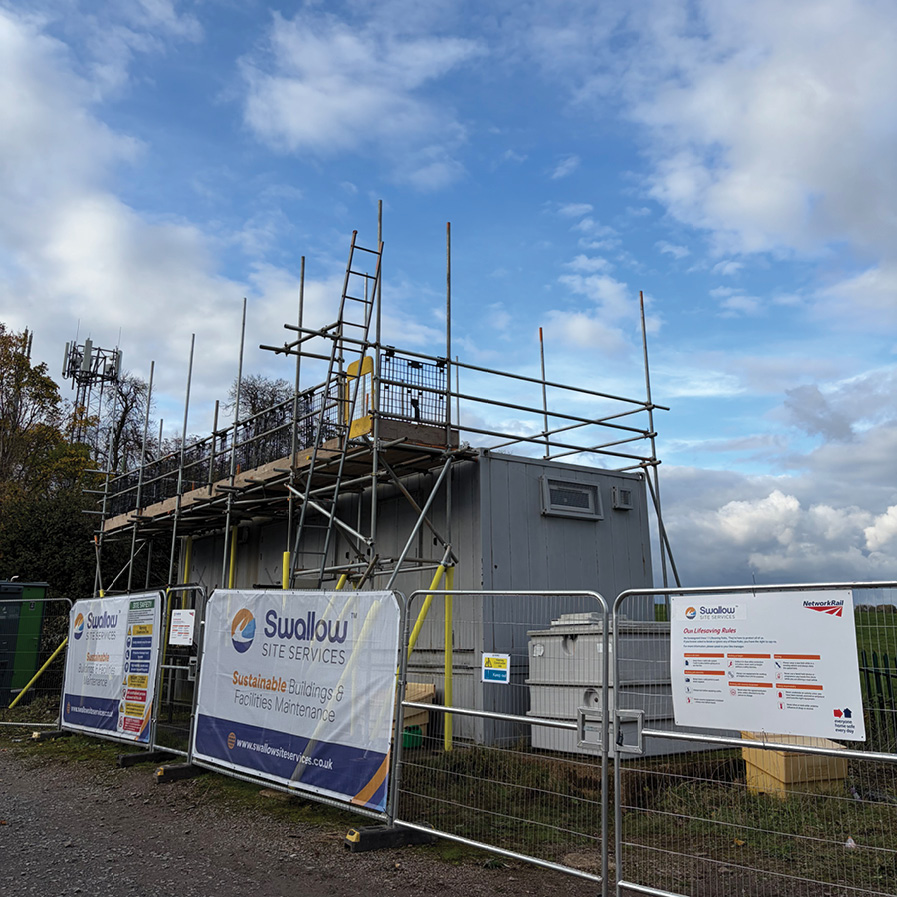
Brinklow Welfare Unit Refurbishment – Water Ingress Remediation & Full Internal Refit
Swallow Site Services delivered a full refurbishment and water ingress remediation programme to a rural operational welfare unit that had been out of service for several years due to persistent water ingress. Rather than proceeding directly to refurbishment, we undertook a structured investigation to accurately diagnose the root cause of moisture penetration. Once identified, a targeted sealing and roof protection strategy was implemented to eliminate ingress at source. Following envelope stabilisation, a complete internal strip-out and refit was undertaken, returning the asset to operational use and extending its service life. Delivered under the Network Rail Framework Agreement, the works were completed safely and efficiently within a live operational environment
Read full case study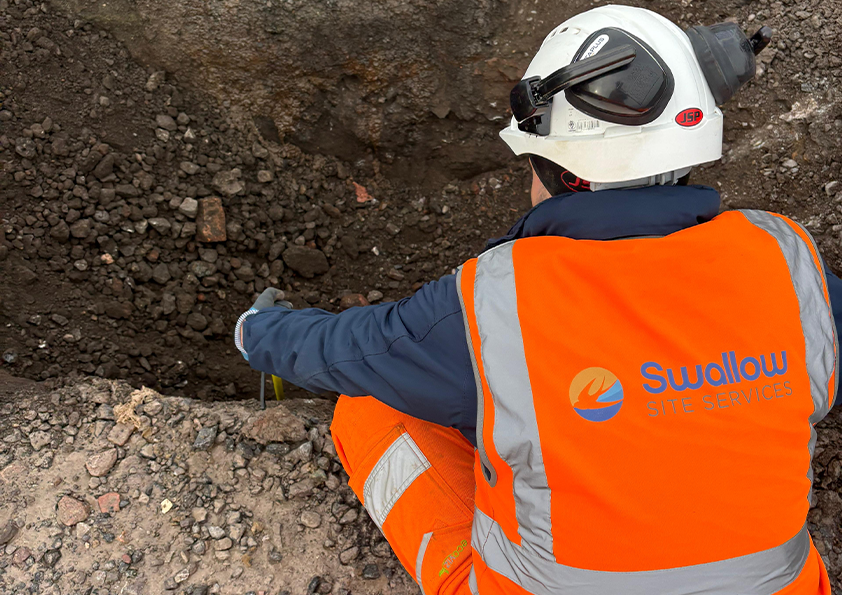
Bristol East Depot – CBR Testing & Subgrade Assessment
Swallow Site Services delivered an in-situ California Bearing Ratio (CBR) testing programme at Bristol East Depot to support the structural design of a proposed access roadway upgrade. Covering approximately 550m², the roadway is scheduled for operational use and will experience sustained heavy goods vehicle traffic. Accurate subgrade data was essential for enabling geogrid pavement design, ensuring long-term durability without unnecessary overdesign or excessive material importation. Delivered under the Network Rail Framework Agreement, the works were completed safely, efficiently and in full compliance within a live depot environment.
Read full case study